Emily Cheng
Professor Dan DiPaolo
WR 152
2 March 2026
Starting Strong: Why Early Education Matters in Somerville
High school statistics and college acceptances are what people typically focus on when defining academic success. However, by senior year of high school, many achievement gaps have been shaped years earlier, dating as far back as a student’s first experience with education: preschool and daycare centers. The achievement gap has stark consequences. Children growing up in low-income families drop out of high school at greater rates compared to those from high-income families (Suh). Since the COVID-19 pandemic, which set many students back in terms of math and reading skills, the education gap has widened noticeably between students of different socioeconomic backgrounds (Jonas). Post-COVID, schools in high-income areas in Massachusetts started seeing test scores bounce back, while schools with more lower-income students continued to record low proficiency rates from 2019 to 2023 (Jonas). To mitigate these achievement gaps, government policies and funding is not only crucial in upper years, but also as early as 3 to 5 years old, an age when children develop rapidly but are still too young for formal K-12 education. As a result, many families seek preschool or childcare, known in the industry as early childhood education (ECE). In order to lessen educational inequality in the city of Somerville, the government should increase access to early education programs for low-income families because participation in those programs leads to long-term academic and economic success.
Somerville is a city with a population of 82,149, and within this population, 3.8% are children under the age of 5 (“U.S. Census Bureau QuickFacts”). The availability of childcare is a commonly experienced issue in Somerville that carries important implications for families’ lifestyles. Somerville has a comprehensive, city-wide plan called the Somerville Vision 2040 which maps out the city’s future development. It addresses a wide range of topics relevant to Somerville residents (housing, public spaces, education, etc.), highlighting areas where the city is achieving positive results and outlining next steps for any persisting challenges. In the education section, one of the concerns raised by the community is the availability and cost of childcare. When seeking programs for their children, parents often face “limited slots and hours, waitlists, high costs, inconvenient locations, and staffing issues” (SomerVision2040 Committee). These factors make it more difficult for parents to find suitable childcare services; even the centers that are available could be located at inconvenient distances or struggle to maintain a proper caregiver-to-child ratio.
Moreover, according to forum participants, “a lack of childcare access is one of the biggest barriers preventing immigrants from taking English and professional training classes” (SomerVision2040 Committee). This is significant because 25% of Somerville’s population are immigrants, and “One in two children in Somerville has at least one immigrant parent” (Vera Institute of Justice). Childcare accessibility not only impacts the children themselves, but also how immigrant parents are able to integrate into the community and develop professionally to provide for the family. The issue of childcare availability is not just a concern for certain parents but is also an important factor of the wellbeing of Somerville overall, due to its high immigrant population.
Issues with accessibility are exacerbated for low-income and immigrant families. Generally, it is difficult for families to find ECE programs. A study by Hutton et al. reports that about “51% of families reported having difficulty finding programs or not finding a program at all.” The process is even more challenging for low-income families and non-English-speaking families, with 61% reporting difficulties (Hutton, et al.). The study reasons that a potential factor of the disparity is that immigrant families tend to have lower-paying jobs with unpredictable hours and less time off. This creates more indirect barriers for immigrant families trying to document their income, submit paperwork, and otherwise undergo the bureaucratic process of applying for subsidies. Moreover, out of those who meet state eligibility requirements for subsidized ECE, only 17% actually receive the government-funded childcare (Hutton, et al.). Thus, even if a family is eligible for subsidized programs, it is likely that their childcare needs will not be met. To increase the accessibility of childcare subsidies, governments should acknowledge and minimize the hidden barriers that impact low-income and immigrant families.
Another key aspect of accessibility is the affordability of childcare. The federal benchmark for affordability is that childcare should not exceed 7% of a family’s income (Federal Register). However, based on survey data, in Massachusetts “nearly three-quarters of full-time, year-round working parents face child care costs that exceed that federal affordability” (Baskin). This is a pressing issue because most full-time employees cannot bring their child into work every day, leaving them dependent on alternative caregivers, such as grandparents or daycare. The high cost of childcare reduces access to valuable enrichment opportunities for low-income children. It also cuts into the family’s overall budget, impacting their ability to save for emergencies or invest in lifestyle improvements.
Current government subsidies allow many families to pay less for childcare or receive it for free, but the supply does not meet the demand. According to an article published by the Boston Globe, 66,000 families receive government-funded childcare subsidies in Massachusetts, but that is only 19% of those eligible (Baskin). An additional 11,500 children in Massachusetts attend Head Start, a federal program that provides free early learning for low-income families (Baskin). For context, Head Start defines “low-income” using the national poverty line: an income of $15,960 per year for a family of one, and $33,000.00 for a family of four (HeadStart; “Federal Poverty Level”). These numbers reveal that the current amount of funding being directed to childcare affordability is simply not enough to cover the amount of need. Even with subsidies and Head Start, many families fall through the gap between those who can pay out of pocket and those who receive the funding for which they are eligible.

Fig 1. Child playing with a toy piano at the Head Start program.
Source: “Head Start & Early Head Start.” Action for Boston Community Development, 13 Jul. 2017, https://bostonabcd.org/service/head-start-childrens-services/.
There are many certified ECE programs across Somerville, but lower-income families may have fewer options. The Massachusetts government website provides an online search tool called “Licensed Child Care Search” that allows families to locate childcare centers, home-based care, and subsidized options based on their location. Narrowing the search to the city of Somerville reveals over thirty “group and school age” childcare centers, some of which can be quite expensive. For example, Bright Horizons, a global chain business, has a center in Davis Square that costs between $3,175 to $4,430 per month depending on the age of the child, which multiplies to at least $38,000 per year (Commonwealth of Massachusetts). Even considering the state’s median household income of $97,344, many families would still struggle to afford these prices, especially if they have multiple toddlers or preschool-age children (“U.S. Census Bureau”). These families would have to find cheaper alternatives, make do without childcare, or apply to government-funded programs if they are eligible. When limiting the search to funded care in Somerville, the search tool results show nine options that are spread out fairly evenly throughout the city.
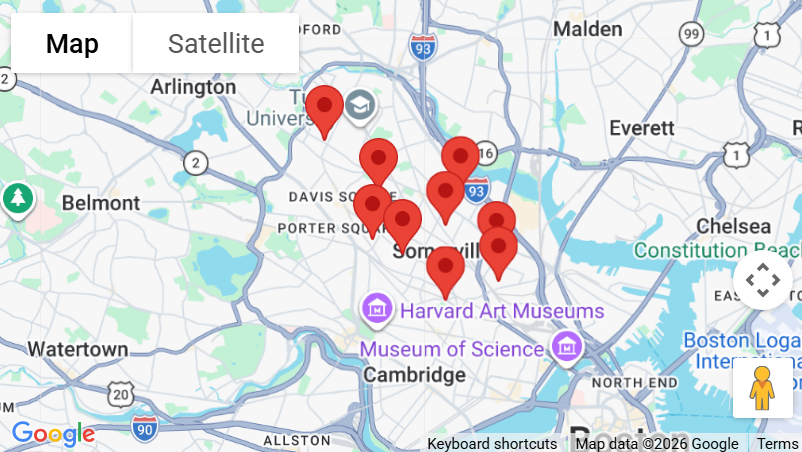
Fig 2. Funded care in Somerville, using Licensed Childcare Search
Source: Commonwealth of Massachusetts. “Licensed Child Care Search.” Mass.Gov, https://eeclead.my.site.com/findchildcare. Accessed 22 Feb. 2026.
Because these funded care programs are operated by K-12 schools, they have relatively large capacities, such as the John. F Kennedy Elementary School which supports 139 students (Commonwealth of Massachusetts). Even so, the number of locations is much fewer compared to childcare centers like Bright Horizons. Thus, economically disadvantaged households are limited to a smaller selection of programs while families that can afford private ECE can be more selective about where they place their child.
Parents may choose part-time or full-time childcare due to their work schedules, but another motivation for seeking ECE is that these programs can prepare children for academic success in kindergarten and even through high school. According to McCoy’s meta-analysis of experimental studies conducted between 1960 to 2016, early childhood education (ECE) is associated with various measures of later academic performance. The results showed that “ECE participation is associated with an 8.09 percentage point decrease in special education placement, 8.29 percentage point decrease in grade retention, and 11.41 percentage point increase in high school graduation” (McCoy). The meta-analysis indicates a statistically significant correlation between childcare attendance and key academic factors, suggesting that ECE programs may strengthen early literacy or better prepare children for formal education. Conversely, one could argue that childcare might not be the main cause of these results. It is possible that families that are able to afford high-quality early childhood education also have access to better K-12 teachers and resources, thus creating an indirect relation between childcare and later academic achievements.
Even so, the correlation between ECE and high school graduation is still important because a high school diploma is standard for admission to most higher education programs and many professional, well-paying fields. Not finishing high school has been linked to negative impacts on health, lower wages, and increased poverty (“High School Graduation”). These negative effects tend to build up and impact a person’s success not just in school, but throughout their lifetime. Access to effective ECE programs may contribute to closing the achievement gap by lowering high school dropout rates and other measured factors of academic performance.
High-quality caregiving sets children up for success in STEM classes because it prompts back-and-forth interactions and encourages critical thinking. A research study published by the American Psychological Association measured caregiving quality through two key aspects, cognitive stimulation and sensitivity-responsivity, and found that higher quality childcare predicted STEM achievement in Grades 3-5 (Bustamante). The study also measured STEM performance in high school based on the most advanced science and math courses that students took, such as Calculus versus Below Algebra 1. The results correlated STEM performance in elementary with STEM achievement in high school, which suggests an indirect connection between the quality of childcare that children receive and their later success in math and science subjects (Bustamante). The results reveal that the quality of childcare received is a significant determinant of the effectiveness of the childcare. Children who are prompted by caregivers to think critically and ask questions are more likely to adapt well to STEM classes in elementary school, which prepares them for success in middle and high school. Furthermore, the implications are significant because STEM-educated college graduates are on average higher paid than non-STEM majors, $101,100 vs. $87,600 (US Census Bureau). The increase in salary would particularly benefit students from low-income families and allow them to challenge the generational cycle of poverty .
Moreover, early childhood learning may mitigate the effects of summer learning loss, a decline in academic skills over the lengthy break that disproportionately impacts low-income students and widens the achievement gap. A study published by the American Educational Research Journal found that “lower-income children showed larger drop-offs in math gains during the summer [before kindergarten] than higher-income children” and “children who enrolled in center-based care during the summer showed less drop-off in growth in math skills than children who stayed at home” (McCormick et al.).
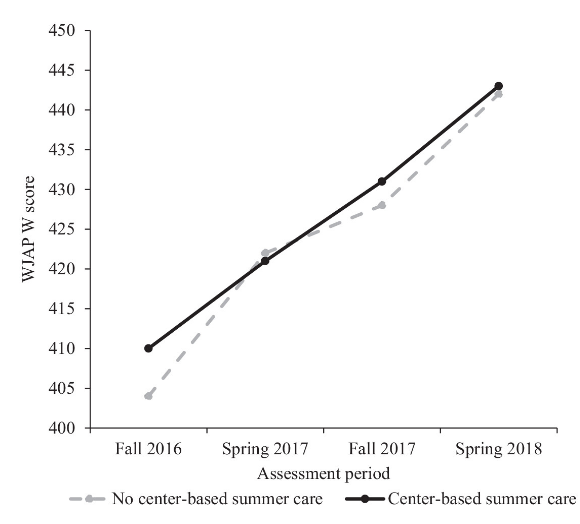
Fig 3. Growth in math skills by center-based vs. no center-based summer care.
Source: McCormick, Meghan P., et al. “Can Center-Based Care Reduce Summer Slowdown Prior to Kindergarten? Exploring Variation by Family Income, Race/Ethnicity, and Dual Language Learner Status.” American Educational Research Journal, vol. 58, no. 2, Jul. 2020, pp. 420–55, doi:10.3102/0002831220944908.
The graph illustrates a dip in math scores over the summer for students who do not participate in center-based summer care, meanwhile the curve for center-based summer care is relatively level. This indicates that effective childcare programs may prevent summer learning loss for low-income children by extending their academic and social learning in a structured environment, as opposed to learning at home, which is less standardized and varies by the family. Therefore, increasing access and funding for summer ECE programs may reduce the achievement gap between low and high-income students.
Early childhood education programs not only benefit the children’s cognitive and academic skills, they also hold significant implications for economies from the local to national scale. According to an article published in Boston Magazine, economists have found that “every dollar the [Massachusetts state] government invests in early education yields a return of around $5 to $15 from increased tax revenue and decreased costs of welfare and incarceration” (Damiano). This suggests that the benefits of government childcare subsidies flow in both directions; children that receive high-quality care and education are more likely to generate greater tax revenue and less likely to become incarcerated, reducing burdens on the criminal justice system. Thus, subsidized childcare is a worthy investment that is expensive but possesses the potential for great returns. Governments on the local, state, and federal level should further examine childcare policies and consider increasing funding so that more families can access ECE services and more children can receive the academic and social benefits.
High-quality early education has long-term social and financial benefits that extend past the first generation. The Perry Preschool was a randomized study developed in the 1960s that tracked how early education programs impacted at-risk African American children in Michigan. Participants were provided with a cognitively stimulating classroom environment, and their mothers received guidance on how to extend the preschool curriculum into the home (“Perry Preschool Project”). Compared to untreated children, children who participated in the early education program had significantly better outcomes in terms of increased employment, health, and reduced criminal activity (“Perry Preschool Project”). Moreover, further research on the project has found that the effects of ECE extend into the second generation: “[Perry participants] tended to have children slightly later in life and remain stably married by the time their children turned 18, all of which afforded parents the ability to provide more resources and attention to the successful development of their children” (Solomon). The amount of wealth and stability that people accumulate as adults often determines the resources that are accessible to their children. The Perry Preschool Project demonstrates that early childhood development may lead to greater social and economic success in adulthood, which enables parents to pass on better resources and social stability to their children. Since the multigenerational effects of early education show little fadeout, these programs have a strong potential for breaking the cycle of poverty by raising income and increasing human capital over generations. Therefore, governments should further invest in high-quality, accessible ECE programs for the benefit of low-income families and society as a whole.
Near-universal childcare systems have been implemented in countries such as Belgium, Denmark, and Lithuania, but to what extent can these policies be implemented in U.S. states? Beginning in November of 2025, New Mexico became the first U.S. state to promise universal childcare (Perry). Previously, the state was already close to this goal, offering subsidies to families that earn $126,600 or less per year, covering 80% of families in the state (Perry). New Mexico’s case demonstrates that universal childcare is not completely out of reach in the United States, and other states can reference New Mexico when implementing their own childcare policies. Such policies would provide great relief to parents who have to maintain full-time jobs but cannot pay for daycare out of pocket. However, it is important to note that finances vary greatly between states. New Mexico has a median income of $63,000 compared to Massachusetts’s $97,344, and costs of living and business are significantly lower in New Mexico (“U.S. Census Bureau QuickFacts”). Moreover, the funding for universal childcare is derived from New Mexico’s taxes on oil and gas production, which expanded significantly in response to rising oil prices between 2020 and 2024, allowing the State to increase spending overall (Perry). This reveals that although it is attractive to call for universal childcare in other states, such programs often depend on the particular state’s available funds and other financial differences.
Furthermore, there have been some challenges following the launch of New Mexico’s initiative in November 2025. Parents living in “child care deserts” report a severe lack of childcare centers in rural areas, and some childcare providers express concerns that government reimbursements (which pay childcare workers around $15 an hour) are not enough to cover the costs of facilities (Potter). This shows that although universal childcare promises great benefits for children and parents, the practical implementation of these policies can be financially straining. To make these systems more sustainable, a potential solution is to “focus on reaching families who need it the most, not those with the means to pay for child care” (Potter). In other words, states should prioritize assisting lower-income families and opening more facilities in childcare deserts, while subsidizing less for high-income families that can afford the cost regardless. This would maximize the available state funds by targeting those who need them the most.
To address the childcare crisis in Somerville, local and state governments should strongly consider increasing childcare subsidies for low-income families, addressing social barriers to access, and encouraging the opening of more childcare locations. ECE programs have been correlated with positive academic factors, including lowered high school dropout rates, and effective programs have shown lasting intergenerational benefits, indicating that high-quality childcare may combat generational poverty. Taken together, government initiatives to increase ECE accessibility and affordability would improve lifestyle factors for many children and their parents, improving community wellbeing overall.
Works Cited
Baskin, Kara. “In Massachusetts, Child Care Costs Are out of Reach for Most Working Parents.” The Boston Globe, 20 Feb. 2026, https://www.bostonglobe.com/2026/02/20/lifestyle/massachusetts-child-care-costs/.
Bureau, U.S. Census. “STEM Majors Earned More Than Other STEM Workers.” Census.Gov, 2 Jun. 2021, https://www.census.gov/library/stories/2021/06/does-majoring-in-stem-lead-to-stem-job-after-graduation.html.
Bustamante, Andres S., et al. “Quality of Early Childcare and Education Predicts High School STEM Achievement for Students from Low-Income Backgrounds.” Developmental Psychology, vol. 59, no. 8, Aug. 2023, pp. 1440–51, doi:10.1037/dev0001546.
Commonwealth of Massachusetts. “Licensed Child Care Search.” Mass.Gov, https://eeclead.my.site.com/findchildcare. Accessed 22 Feb. 2026.
Damiano, Mike. “Will We Ever Solve the Childcare Crisis?” Boston Magazine, 26 Aug. 2021, https://www.bostonmagazine.com/news/2021/08/26/childcare-crisis-massachusetts/.
“Federal Poverty Level (FPL) - Glossary.” HealthCare.Gov, 2026, https://www.healthcare.gov/glossary/federal-poverty-level-fpl/.
Federal Register. Improving Child Care Access, Affordability, and Stability in the Child Care and Development Fund (CCDF). 1 Mar. 2024, https://www.federalregister.gov/documents/2024/03/01/2024-04139/improving-child-care-access-affordability-and-stability-in-the-child-care-and-development-fund-ccdf.
Head Start. “Head Start FAQs.” HeadStart.Gov, 2025, https://headstart.gov/about-us/article/head-start-faqs.
“Head Start & Early Head Start.” Action for Boston Community Development, 13 Jul. 2017, https://bostonabcd.org/service/head-start-childrens-services/.
“High School Graduation - Healthy People 2030.” Odphp.Health.Gov, https://odphp.health.gov/healthypeople/priority-areas/social-determinants-health/literature-summaries/high-school-graduation. Accessed 22 Feb. 2026.
Hutton, Rebekah, and LaRue Allen, editors. Closing the Opportunity Gap for Young Children. National Academies Press, 2023.
Jonas, Michael. “In Wake of Pandemic, Mass. Achievement Gap Has Widened.” CommonWealth Beacon, 20 May 2024, https://commonwealthbeacon.org/education/in-wake-of-pandemic-mass-achievement-gap-has-widened/.
McCormick, Meghan P., et al. “Can Center-Based Care Reduce Summer Slowdown Prior to Kindergarten? Exploring Variation by Family Income, Race/Ethnicity, and Dual Language Learner Status.” American Educational Research Journal, vol. 58, no. 2, Jul. 2020, pp. 420–55, doi:10.3102/0002831220944908.
McCoy, Dana Charles, et al. “Impacts of Early Childhood Education on Medium- and Long-Term Educational Outcomes.” Educational Researcher, vol. 46, no. 8, Nov. 2017, pp. 474–87, doi:10.3102/0013189x17737739.
Perry, Andrew. “How New Mexico Will Pay for Universal Childcare.” Fiscal Policy Institute, 29 Oct. 2025, https://fiscalpolicy.org/how-new-mexico-will-pay-for-universal-childcare.
“Perry Preschool Project.” Center for the Economics of Human Development, 21 Jun. 2017, https://cehd.uchicago.edu/?page_id=958.
Potter, Chris. “Growing Pains: Challenges Emerge as New Mexico Rolls out No-Cost Child Care for All.” Searchlight New Mexico, 5 Jan. 2026, https://searchlightnm.org/growing-pains-challenges-emerge-as-new-mexico-rolls-out-no-cost-child-care-for-all/.
Solomon, Catherine. “Perry Preschool: Intergenerational Effects Research Summary.” The Heckman Equation, 13 May 2019, https://heckmanequation.org/resource/perry-intergenerational-effects-summary/.
SomerVision2040 Committee (SVC). “Somervision2040 – Our Long Term Comprehensive Plan.” City of Somerville, https://www.somervision2040.com/. Accessed 17 Feb. 2026.
Suh, Rana. “School Dropout Issues.” EBSCO, 2023, https://www.ebsco.com/research-starters/education/school-dropout-issues.
“U.S. Census Bureau QuickFacts: Boston City, Massachusetts.” United States Census Bureau QuickFacts, https://www.census.gov/quickfacts/fact/table/bostoncitymassachusetts/INC110224. Accessed 22 Feb. 2026.
Vera Institute of Justice. “Profile of Immigrants in Somerville, Massachusetts.” Mar. 2025, https://vera-institute.files.svdcdn.com/production/downloads/publications/Somerville_Immigrant_Population_Profile.pdf?dm=1748636392.
“Where Do Rich Countries Stand on Childcare?” Office of Strategy and Evidence Innocenti, Jun. 2021, https://www.unicef.org/innocenti/reports/where-do-rich-countries-stand-childcare.